
About
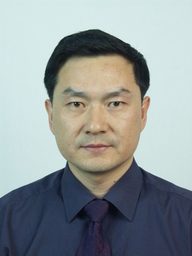
Dr. Wang, or Baodong, as friends and colleagues fondly call him, was born on May 13, 1964, in a village in Shandong Province, China. He received basic education in his hometown before moving to Qingdao for higher education. After completing his bachelor's and master's in marine chemistry from Ocean University of China, he joined the First Institute of Oceanography (FIO), which used to belong to the State Oceanic Administration and now belongs to the Ministry of Natural Resources, and began his career in Chemical Oceanography in 1988. He worked at the University of Hamburg as a visiting scholar in 2004. He obtained his Ph.D. as a part-time doctoral candidate from Ocean University of China in 2006. Wang's career advanced steadily, he has been being listed in the Elsevier and Stanford University's Top 2% Scientists since 2021.
Experience
No experience added yet.
Education
No education added yet.
Skills
Other Publications
Cultural eutrophication in the Changjiang (Yangtze River) plume: History and perspective
Estuarine Coastal and Shelf Science 69:471-477, Sep 2006
The Changjiang (Yangtze River) is known to contribute significantly to the eutrophication that has caused drastic changes to the ecosystem of the East China Sea. However, evidence for historical changes in nutrient concentrations and composition and the consequent effects on the ecosystem in the coastal water is sparse. In this paper we present some long-term data for nutrient concentrations and Si:N:P ratios in the freshwater and the river plume and the long-term response of the ecosystem structure in the river plume. These data reveal increases in the dissolved inorganic nitrogen and phosphate concentrations in the Changjiang freshwater by a factor of five from the1960s to the end of the 1990s and a reduction in dissolved silicate by two thirds over the same period. Concomitantly, an increase in DIN concentration and a reduction in silicate concentration both by a factor of two were observed in the surface water of the Changjiang plume. As an ecological consequence to such nutrient changes, the chlorophyll a concentration increased by a factor of four since the 1980s and harmful algal blooms increased rapidly since 1985 in the Changjiang estuary and adjacent sea areas. The macrozoobenthic biomass decreased sharply from the mid 1980s to the present, suggesting that the Changjiang estuary has been in a high eutrophication state since that time. We predict that, due to the continuously increasing nutrient pressure, the symptoms of eutrophication associated with nutrients will worsen in the Changjiang plume in the near future.
A historical overview of coastal eutrophication in the China Seas
Marine Pollution Bulletin 136:394-400, Sep 2018
China's rapid economic and social development has led to an acceleration in nutrient inputs to coastal waters, which, in turn, has resulted in severe coastal eutrophication. On the occasion of the 40th anniversary of China’s reform and opening up, the evolution of the causative factors and the state as well as future prospects for coastal eutrophication in the China Seas are analyzed and summarized. Results showed that the coastal eutrophication situation was not so serious at the beginning of reform and opening up, but it worsened rapidly from the end of the 1980s to the mid-2000s. In the last decade, the worsening trend has been curbed but the status of coastal eutrophication has not been substantially improved. Much work is still needed to be able control the total amount of nutrients entering coastal waters and enable comprehensive treatment of coastal eutrophication in the China Seas.
Annual cycle of hypoxia off the Changjiang (Yangtze River) Estuary
Marine Environmental Research 77:1-5, Jun 2012
The annual cycle of hypoxia off the Changjiang Estuary, China, was assessed from data acquired during nine cruises in 2006-2007. Hypoxia began to develop in late spring and early summer, reached its maximum in August, weakened in the autumn and finally disappeared in the winter. Hypoxia first developed south-east of the Changjiang Estuary in June, appeared in the east and north-east in July, and spread both south and north of the Changjiang Estuary in August. By September, it had started to recede in the north-east, and had dissipated in the southern part of the studied area by winter. The geographical displacement of the hypoxic zone was controlled by both seasonal changes in regional water column stratification and variations of the northward extension of the Taiwan Warm Current toward the Changjiang Estuary.
Spatial and Interannual Variability in Distributions and Cycling of Summer Biogenic Sulfur in the Bering Sea
Geophysical Research Letters 46:4816-4825, May 2019
Plain Language Summary The Bering Sea has undergone a warming and responds rapidly to climate change on temporal scales. The resulting marine ecosystem reorganization in the Bering Sea has the potential to exert profound impacts on the local marine biogeochemical cycles and the sea‐to‐air fluxes of dimethylsulfide (DMS). Data on temporally detailed DMS and DMSP measurements in the Bering Sea are rare. Three summer cruises to the Bering Sea, one covering the cold year (2012) and two covering warm years (2014 and 2016), provided an opportunity to study how oceanic biogenic dimethylated sulfur compounds may respond to spatiotemporal variations to ocean warming resulting from climate change. Seawater warming of 1.6 °C in the upper layer of the basin‐slope‐shelf section from cold to warm years was accompanied by elevated phytoplankton biomass, further leading to increases in DMS and DMSPd concentrations. Both vertical and horizontal extensions of high DMS/DMSPp patches at 177°E–175°W from 2012 to 2016 were caused by variations in plankton biomass and community structure. Summer DMS sea‐to‐air fluxes increased sharply by threefold to fivefold due to a coincident warming of 2.8 °C in the surface water, which would exert climate cooling effects inverse to those of the CO2 built up in the Bering Sea.
Carbon dioxide–induced acidification enhances short‐lived brominated hydrocarbons production in oligotrophic oceans
Limnology and Oceanography 70(4):1016-1031, Feb 2025
Oceanic emission is a primary source of brominated very short‐lived substances (BrVSLs) to the atmosphere, which have important effects on stratospheric ozone chemistry. Marine biogeochemical processes regulating BrVSLs are often sensitive to ocean acidification. Yet, the response of BrVSLs production to acidification remains poorly understood. Herein, the effects of acidification on the production of two main BrVSLs, dibromomethane (CH2Br2) and tribromomethane (CHBr3), were studied by ship‐based incubation experiments at three stations in the South Atlantic and Indian Oceans. The average CH2Br2 and CHBr3 concentrations increased by 17.2–58.7% and 14.3–80.3% due to acidification under the in situ nutrient conditions with nutrient and/or iron limitation at the three stations, but the mechanisms driving these increases varied among different regions. The increased bromoperoxidase (BrPO) activity caused by acidification facilitated BrVSLs release in the Eastern Tropical Indian Ocean, where diatoms were dominant. CHBr3 increased due to acidification as a result of enhanced reactivity of dissolved organic matter (DOM) in the Eastern Tropical Atlantic, where dinoflagellates were dominant. Brominated very short‐lived substances increased due to acidification as a result of a combined effect of the above two mechanisms in the Benguela Current Coastal with high phytoplankton abundance. Under the nutrient and/or iron addition conditions with nutrient and iron sufficiency, however, acidification did not promote BrVSLs production due to its only minor effect on the BrPO activity and reactivity of DOM, partly because the effect of increased oxidative stress was offset by that of changed phytoplankton composition. Our study provided a basis for future modeling on the impact of acidification on global BrVSLs emissions.
Collaborator Notes
No notes yet.
Sign in to write a note.